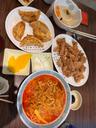
Yeongbinru (영빈루) is a Chinese restaurant located in Sinjang-dong, Pyeongtaek, Gyeonggi Province, in the Songtan area. Opened in 1945, it is a long-established restaurant that has remained in the same family for generations and is widely known as one of the so-called “five best jjamppong restaurants in Korea.” It is famous for its jjamppong, which features a rich, spicy broth with thinly sliced pork instead of seafood, and is regarded as an iconic establishment representing one major style of Korean jjamppong.
• Origins: The restaurant was opened in 1945 by a founder of Chinese descent. Located near the U.S. military base in Songtan, it built its reputation through a thriving business serving local residents and military personnel.
• Family succession: The founder’s sons subsequently took over the family business. In the process, prominent spin-off brands such as Choma (초마) emerged in Seoul and elsewhere, exerting considerable influence on Korea’s Chinese restaurant industry.
• Present day: Having remained in the same location for many years, it has become one of Pyeongtaek’s best-known culinary destinations. It retains its identity as a long-established restaurant, with the passage of time evident in the building’s exterior and interior atmosphere.
• The archetype of pork jjamppong: Unlike typical Chinese restaurants that emphasize seafood such as mussels and squid, it uses finely sliced pork and squid as its main ingredients, giving the broth a rich body and savory flavor.
• Cooking method: Rather than retaining their crispness, the vegetables are cooked thoroughly in the broth to infuse it with their flavors. The dish aims for a balance of restrained wok hei and moderate spiciness.
• Focus on value: For many years, the restaurant has maintained relatively affordable prices compared with nearby businesses, preserving its image as an unpretentious, working-class institution.
• Atmosphere: Rather than elaborate decor, the restaurant has the modest, familiar atmosphere characteristic of an old establishment. Instead of large banquet seating, it has a practical layout that allows families and nearby office workers to visit comfortably.
• Service: Rather than formal service, it follows the fast and efficient service style of an ordinary Chinese restaurant. Local regulars account for a very large share of its customers, alongside tourists.
• Jjamppong: This is the signature dish that represents Yeongbinru (영빈루). It features thinly shredded meat toppings and a deep-red, rich broth.
• Yakkimandu (fried dumplings): A popular side dish served with jjamppong, consisting of rustic, handmade dumplings fried until crisp.
• Tangsuyuk: This dish is served with an old-fashioned translucent sauce made without ketchup, emphasizing the natural flavor of the meat.
• Method: The restaurant primarily serves walk-in customers rather than operating a separate, sophisticated reservation system.
• Difficulty: Visitors from the surrounding area and elsewhere may cause waits during weekend lunch hours, but the rapid table turnover means that securing a seat is generally not particularly difficult.
• Location: The main branch is located in Sinjang-dong, Pyeongtaek, Gyeonggi Province, and is accessible via a nearby public parking lot.
• Hours: It operates from the morning through the evening. As is common with long-established restaurants, it may close early if ingredients run out.
• Blue Ribbon Survey: It has received ribbons for several years and has been listed as a must-visit destination in Pyeongtaek.
• Mass media: It has been featured as a nationally renowned jjamppong restaurant on numerous food programs, including 'Suyo Misikhoe (수요미식회)'.
• References include Pyeongtaek City's cultural tourism restaurant guide and promotional materials published by the local government.
• Based on official listings in major Korean restaurant guides, including the Blue Ribbon Survey.
• Based on accounts of visits to long-established restaurants by numerous food journalists and critics.
Parent Articles