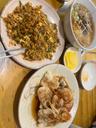
Yongchoushou (용초수) is a Chinese restaurant located in Anam-dong, Seongbuk-gu, Seoul, toward Jegi-dong from Korea University. The restaurant's name, 'Yongchoushou,' appears to have been taken from 'long chaoshou (龙抄手)', a famous Sichuan wonton dish, and its cooking likewise draws on the bold flavors of Sichuan and Hunan cuisines. Known for offering the value typical of a university district alongside professional-level wok handling, it is widely recognized not only among nearby students but also among Chinese food enthusiasts who travel from farther away.
• Opening and growth: It has operated for several years in the commercial district of Anam-dong near Korea University, becoming a longstanding fixture in the area. It began on a small scale, but word spread on the strength of its distinctive flavor profile, leading to repeated growth and relocation to larger premises.
• Influence of chefs from China: With kitchen staff skilled in cooking methods used in China at the core of its operation, it has developed a dish-focused menu that differs markedly from typical Korean-style jajangmyeon and jjamppong restaurants.
• Sichuan- and Hunan-style cooking: Chili oil and spices are used generously to emphasize intense wok hei and heat. Its frying technique, which leaves each grain of rice seemingly coated, is particularly well regarded.
• Balance with Korean localization: While retaining the pronounced aromas of authentic Chinese cuisine, it strikes a careful balance between the savory depth and sweetness favored by Korean diners, precisely targeting what might be described as 'authentic Chinese cuisine that Koreans enjoy.'
• Energy of the open kitchen: The sounds of high-powered burners and wok handling from the kitchen add vibrancy to the restaurant and inspire confidence in its cooking.
• Space: As befits a restaurant in a university district, the space is practical and lively. It is crowded with Korea University students during lunch and dinner hours, and waits are common.
• Service: It has a fast turnover and an efficient serving system. Its service is characterized more by the speed and accuracy of a casual restaurant than by the attentiveness of fine dining.
• Suitability: It is well suited to meals with friends, student club gatherings, or enjoying a proper Chinese meal alone.
• Hunan fried rice (호남볶음밥): This is the most iconic dish at Yongchosu (용초수). Finely chopped chili peppers, pork, and vegetables are quickly stir-fried over high heat, producing a distinctive spicy, smoky flavor.
• Guobaorou (꿔바로우): The sauce has a stronger acidity and vinegar aroma than typical tangsuyuk, while the batter is exceptionally crisp and chewy. It effectively recreates the pungent aroma characteristic of authentic northern-style guobaorou.
• Beef noodles / Sichuan noodles (소고기면 / 사천면): These noodle dishes feature a deep, rich broth enhanced with mala aromas or spicy seasoning, and are popular both as a hangover meal and as a regular meal.
• Liangban huanggua, cucumber salad (량반황과(오이무침)): It is regarded as an essential side dish that refreshes the palate between fried and stir-fried dishes that can otherwise feel rich.
• Location: It is located on Goryeodae-ro 24-gil, Seongbuk-gu, Seoul, near Anam Station.
• Operating characteristics: Operating frequency may differ between the university semester and vacation periods, and there is a break between service hours, so checking before visiting is recommended.
• References include numerous recommendations from food discussion boards in Korea University communities such as Koreapas (고파스).
• Based on user reviews and ratings from major domestic restaurant apps such as Sikshin (식신) and MangoPlate (망고플레이트).
• Based on content from food-service industry blogs and reports analyzing commercial districts around universities.
Parent Articles